

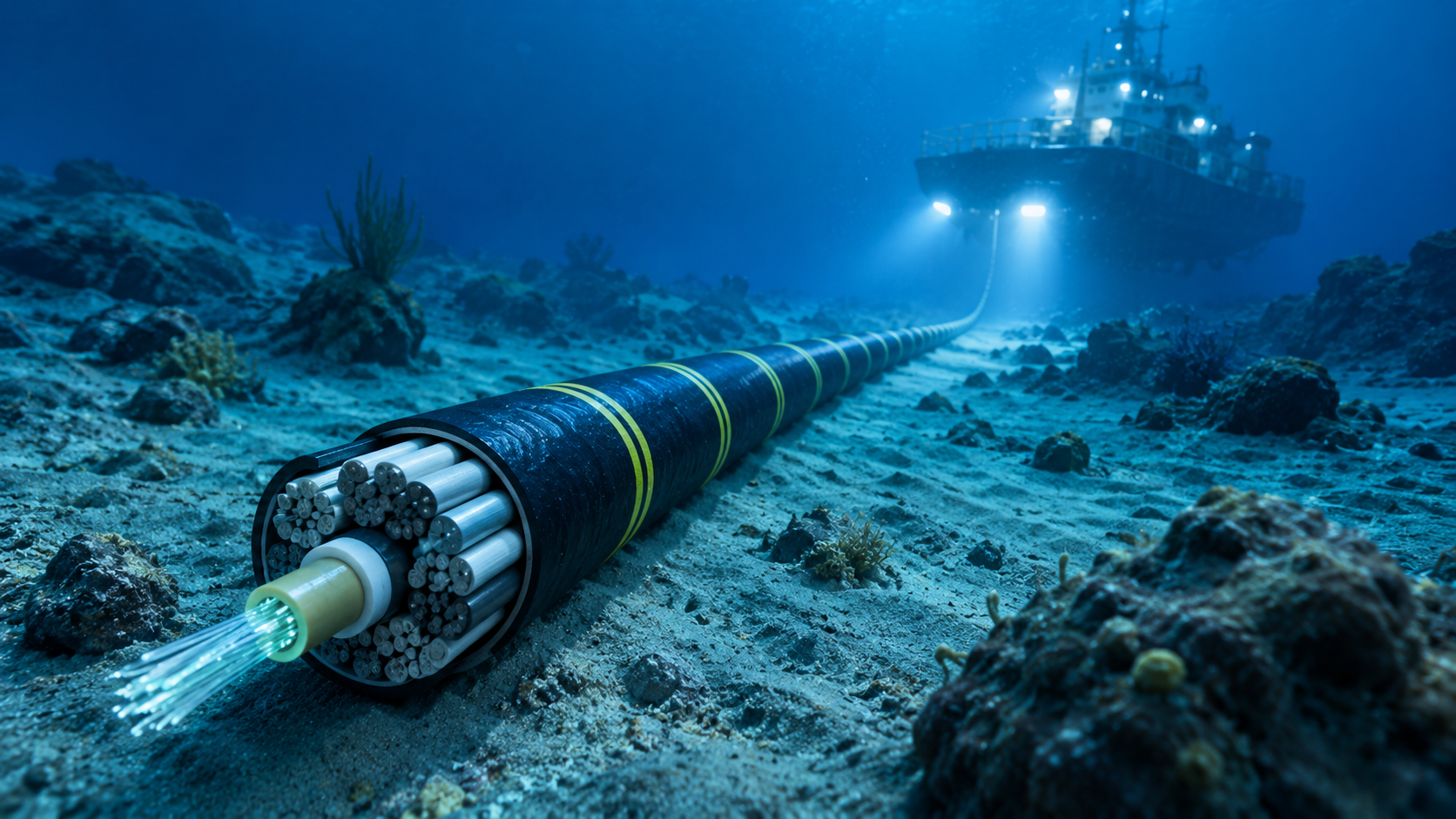
Gulf countries including Saudi Arabia and the UAE face a strategic vulnerability because their AI plans rely on a small number of undersea cables running through the Red Sea and the Strait of Hormuz.
Wired Middle East reported that undersea cables carry about 95% of international data traffic and that much of the Gulf’s links to Europe and the US still transit just a few routes.
In 2025 two cables linking Europe to the Middle East and Asia were cut in the Red Sea, degrading connectivity across the Gulf for days and causing an estimated $3.5 billion in damages from lost services, and the AI roll-out makes such outages costlier because modern AI workloads need continuous, high-volume data flows.
Gulf operators are pursuing a layered response: new terrestrial corridors across Saudi Arabia, the UAE and Oman; subsea‑to‑land systems designed to bypass maritime chokepoints; and northern overland routes through Iraq, Syria and Turkey.
Saudi state telecom Stc Group is investing $800 million to revive a Jeddah‑Amman‑Damascus‑Istanbul route it calls SilkLink, and a consortium of Iraqi and Emirati firms is building the $700 million WorldLink cable from the UAE to Iraq and overland into Turkey.
Related reading
- Meta expands AWS Graviton use for agentic AI
- Anthropic seeks European data centre deals, hires dealmaker
- Meta breaks ground on Tulsa AI data center
Satellite services are being added for redundancy because they are harder to sabotage, but they carry far less data and have higher latency than fiber, so they remain a supporting option.
Those projects are unfinished and regional instability remains a constraint, and how the Gulf reshapes its connectivity could set a template for other AI-driven economies building resilience.